

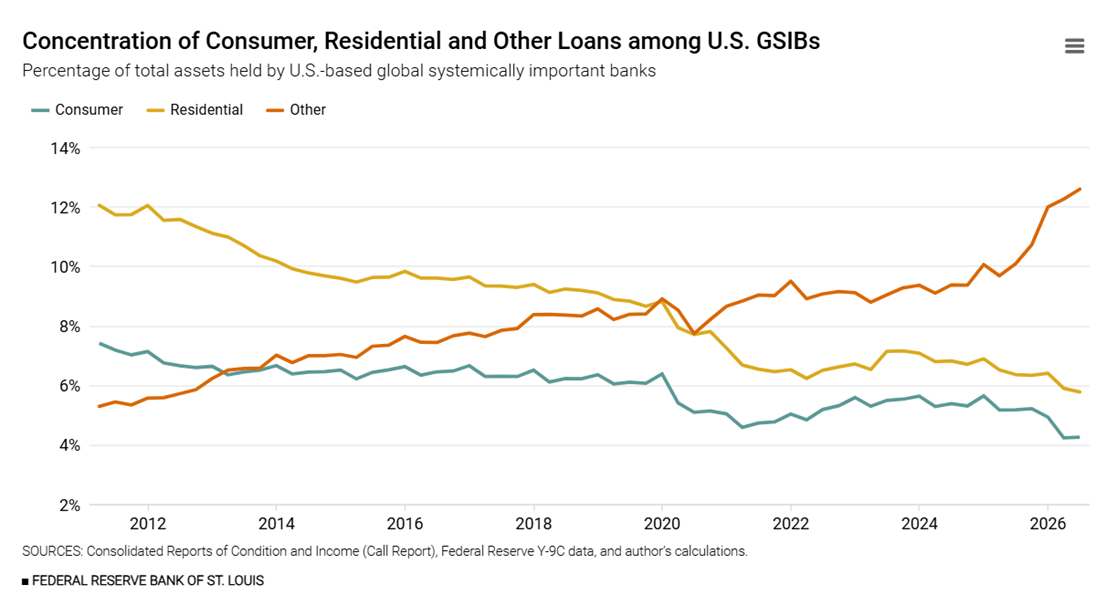
Loan composition at the eight U.S.-based global systemically important banks (GSIBs) has changed dramatically in the past 15 years.1 By June 30, 2026, less-traditional loans (officially known as “other loans”) at these GSIBs represented 12.6% of total assets, up from 10.1% as of June 30, 2025, and 5.4% as of June 30, 2011.2 In fact, this loan type became the largest loan category for these GSIBs at the end of 2019.
Meanwhile, more-traditional lending by U.S.-based GSIBs in the form of residential real estate and consumer loans — the two largest types of traditional lending — represented 5.8% and 4.2% of total assets, respectively, as of June 30, 2026, down from 11.7% and 7.2%, respectively, as of June 30, 2011.3 (See the figure below.)
Growing Lending through Nonbank Financial Institutions Accelerated in 2025
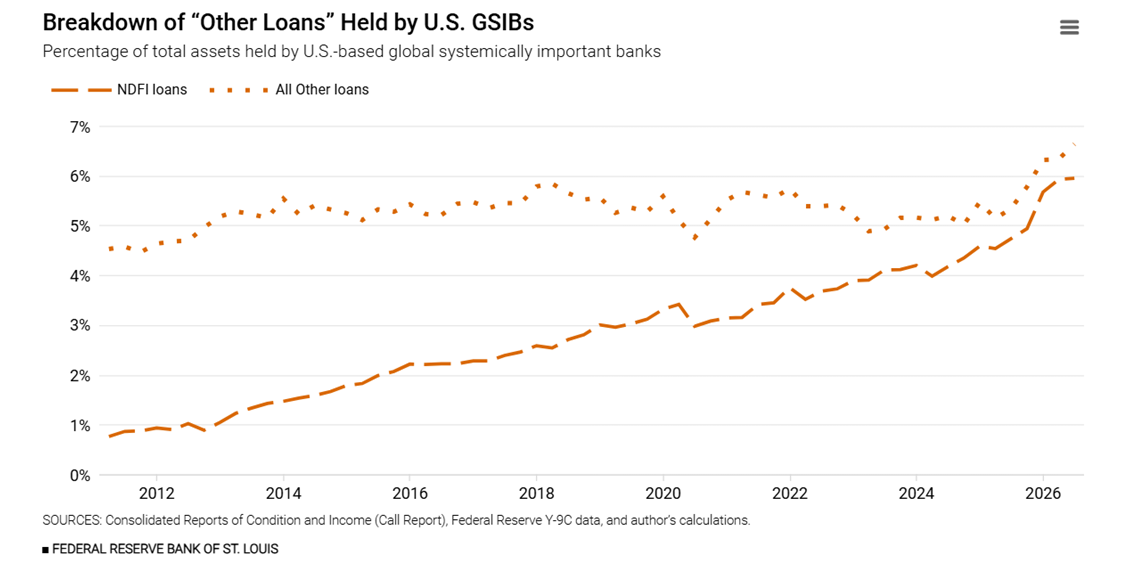
This less-traditional, or “other loans,” category is divided into two subcategories: lending to nondepository financial institutions (NDFIs) and what is called “all other” lending. (See the second figure.) NDFI lending is indirect lending to consumers and businesses via nonbanks, such as mortgage companies, insurance companies, and private credit and equity funds. Lending to NDFIs has driven the growth in the broader “other loans” category for many years. However, accelerated growth in loans to NDFIs in 2025 coincided with substantial asset reclassifications from other loan types throughout the year.4
Securities-Based Lending Also Becoming More Important to GSIBs
“All other” lending also has recently accelerated, led by growth in “loans for purchasing or carrying securities,” which is its largest component, as well as reclassifications.5 The definition of “loans for purchasing or carrying securities” includes secured or unsecured loans for the purpose of buying or carrying securities, such as margin loans,6 and other loans such as securities-based lines of credit, which can’t be used to buy or carry securities.
Historically, this “all other” category of lending consistently represented approximately 5% of total U.S.-based GSIB assets. However, this category accelerated to 6.6% of total GSIB assets by June 30, 2026, driven by increased securities-based lending that coincided with higher stock market valuations.
Notes
- Of the 29 GSIBs in the world, eight are based in the U.S.: Bank of America, Bank of New York Mellon, Citigroup, Goldman Sachs, JPMorgan Chase, Morgan Stanley, State Street and Wells Fargo.
- The initial reporting period for aggregate nondepository financial institution (NDFI) lending data was the first quarter of 2011, with a report date of March 31, 2011. NDFI lending is a subcategory of “other loans” in this Banking Analytics blog post.
- Residential real estate lending refers to outstanding first and junior liens and home equity lines of credit. Consumer loans include loans to individuals for household, family and other personal expenditures, such as credit cards, other revolving credit plans, automobile loans, student loans and other consumer loans that include single or installment payments.
- Significant asset reclassifications occurred throughout 2025, according to the notes on data published by the Federal Reserve Board of Governors.
- Besides securities-based loans, “all other” loans include obligations of states and other political subdivisions in the U.S., lease financing receivables and other loans.A securities-based margin loan is a loan provided to an investor that is secured by the borrower’s investment portfolio, which generally consists of equity and debt securities with readily determinable fair values. Margin loans generally involve ongoing monitoring and margining practices in which the lender routinely reviews the value of the underlying securities collateral to ensure it remains sufficient to secure the loan. Generally, if the market value of the underlying securities falls below a certain threshold, the lender may initiate a “margin call” in which the lender demands that the investor deposit further cash or securities to cover possible losses.