

KEY TAKEAWAYS
- Following robust agricultural loan growth in 2025, the value of outstanding agricultural loans at U.S. community banks stood at $162.6 billion at the end of the first quarter of 2026, up 4.6% from a year ago.
- Agricultural production loans showed particularly strong growth, rising 6.1% year-over-year, consistent with increasing farm input costs.
- Agricultural lending is concentrated among a subset of specialized lenders. As of the first quarter of 2026, “agricultural banks” represented only 20% of all U.S. banks but held 40% of total agricultural loans.
Following robust agricultural loan growth in 2025, the value of outstanding agricultural loans at U.S. community banks stood at $162.6 billion at the end of the first quarter of 2026, up 4.6% from a year ago.1 Growth was particularly pronounced in agricultural production loans, which increased by 6.1% year-over-year.
Understanding Agricultural Loan Categories
Agricultural lending can be broken down into two distinct categories: real estate loans (farmland loans) and non-real estate loans (agricultural production loans). As of March 31, 2026, farmland loans represented approximately 62% of total agricultural lending at community banks, while agricultural production loans accounted for 38%.
Farmland loans help farmers purchase farmland or construct buildings and facilities through long-term mortgages that typically extend 15 to 30 years, secured by the property being financed.
Agricultural production loans support the operational aspects of farming and include equipment and livestock loans as well as operating lines of credit. Equipment loans fund machinery purchases, such as tractors and combines, while livestock loans finance the purchase of animals for breeding, dairy or meat production. Operating lines of credit provide short-term financing for seasonal expenses—such as seed, fertilizer, pesticides and labor—typically repaid after harvest when crops are sold.
The year-over-year growth in agricultural production loans is consistent with increasing input costs for farmers, who require greater financing to maintain operations. Additionally, carryover debt may contribute to this loan growth. Carryover debt occurs when a farmer’s income in a given year is not sufficient to pay off their operating loan, so the unpaid balance carries over to the next year.
Agricultural Growth Implications
While some growth is typical across most lending categories each year, driven by inflation that increases underlying costs and loan sizes, robust growth in agricultural lending may lead to an even more concentrated creditor base, given the sector's highly concentrated structure.
As of the first quarter of 2026, banking organizations with at least 25% of total lending in agricultural loan types (agricultural banks) represented approximately 20% of all U.S. banks but accounted for 40% of total agricultural loans outstanding. These agricultural banks consisted exclusively of community banks.
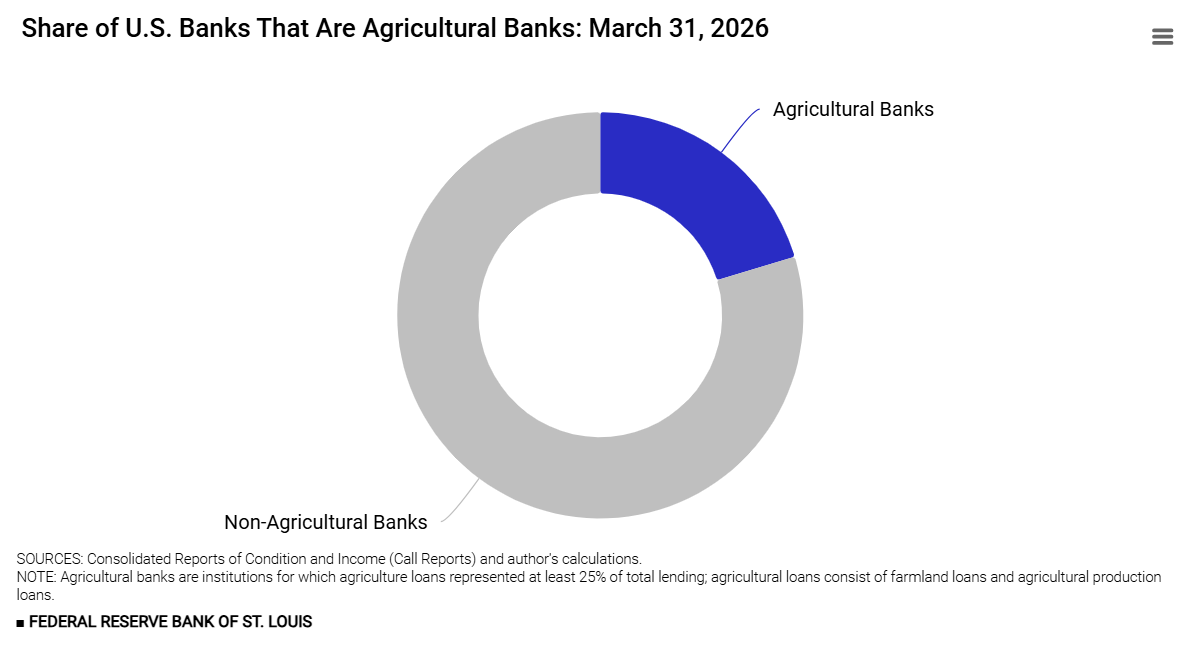
This trend highlights the specialized nature of agricultural lending in the U.S. banking system. While most banks carry minimal agricultural exposure, a dedicated group of institutions, typically community banks in rural areas, maintain substantial agricultural lending operations, as shown in the figure below.
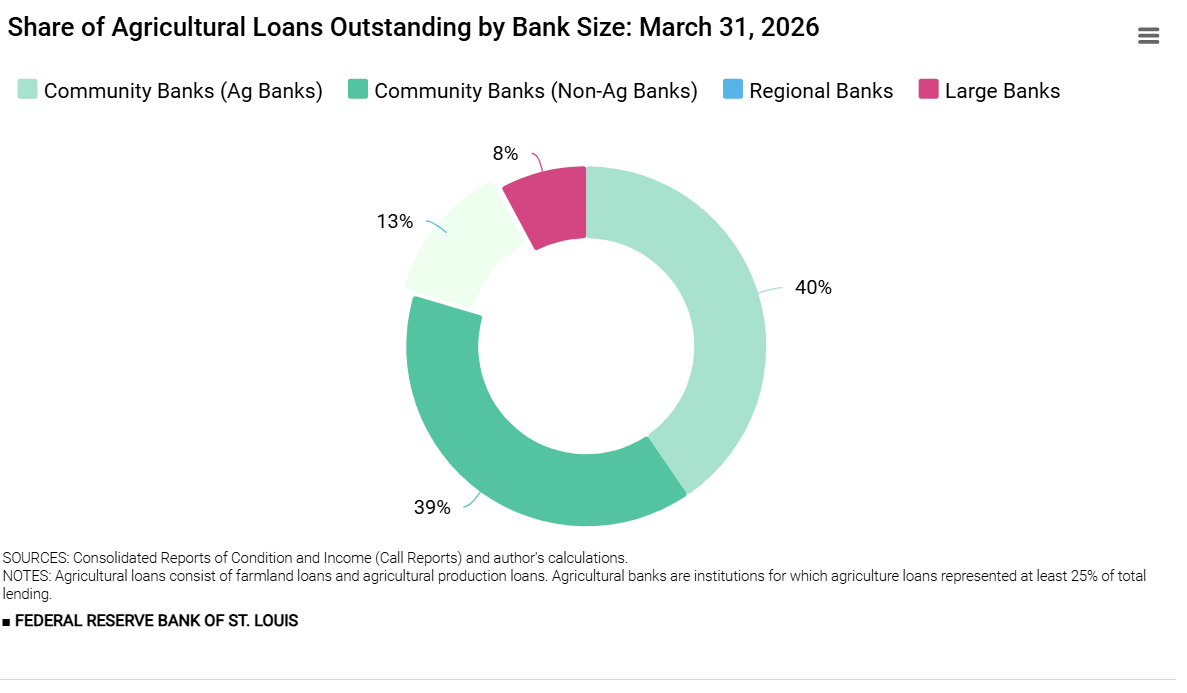
This specialization presents a risk to these institutions, as changes in agricultural economic conditions could have outsized impacts on these banks’ financial health, underscoring the importance of strong risk management practices.
Note
1. In this article, U.S. community banks are defined as banking institutions with less than $10 billion in assets. Larger banking institutions include regional banks, with assets ranging from $10 billion to $100 billion, and large banks, with assets greater than $100 billion.